Steel rebar adds tensile strength to concrete and helps it resist cracking. It’s also essential for concrete to handle stress and take bending forces.
Fibers reduce rebar usage and provide an alternative for concrete reinforcement. They boost tensile and flexural strength, control plastic shrinkage cracks, and resist chemical damage. For high-performance mixes and expert solutions, trust the specialists in concrete Franklin TN.
Steel Rebar
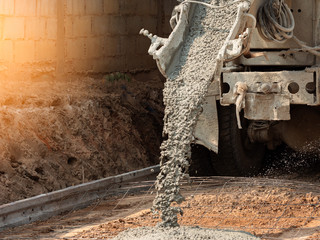
Concrete does well with compressive stress, but it doesn’t fare as well with tensile or shear stress. This is why most concrete structures need some sort of reinforcement. Steel rebar is the most common form of concrete reinforcement, and is typically used in structures that require shear or tensile strength, including bridges and parking garages. Reinforced concrete is also often used for walls, foundations, and other large-scale structural elements.
When steel rebar is placed in concrete, it forms a grid of intersecting lines that increase the strength and durability of a structure. It can be either manually or machine-placed, and is usually cut to the proper length using a specialized rebar cutter that can be manual, electric, or hydraulic, depending on the project size and complexity. Inaccurate cuts could compromise the effectiveness of the reinforcement, which can lead to structural failure.
Rebar is commonly made of carbon steel, and has a thermal expansion coefficient nearly equal to concrete’s. This helps to ensure that the rebar experiences minimal differential stresses when subjected to changing temperatures. Rebar can be anchored in the concrete with special end hooks, or embedded deeper into the concrete using ribs that mechanically lock it to the concrete and other rebar.
Code acceptance – Steel rebar is accepted by all modern concrete design codes, and can be joined to itself or other bars with welding and couplers. It is also able to withstand high temperatures without experiencing a loss in its strength or ductility.
Corrosion – The natural alkalinity of concrete and oxygen in water cause corrosion in the steel rebar used to reinforce it. The corrosion eats away at the steel, which eventually reduces its capacity to carry the applied load.
This corrosion can be minimized by utilizing galvanized or stainless steel rebar, which are available for use in applications where corrosion is a concern. In addition, adding a corrosion inhibitor, such as calcium nitrite (Ca(NO2)2], to the concrete mix can help prevent corrosion. The use of corrosion-resistant rebar is especially important for concrete in wet or cold climates, where deicing salts can contaminate the concrete and the rebar.
Fibers
Concrete may seem indestructible: it holds up bridges and skyscrapers and makes up the foundation of our modern world. But the material has one fatal flaw: while it excels at handling compression forces, it is weak when it comes to tension (pulling) forces. That’s where reinforcement comes in. Reinforcement turns brittle concrete into a rugged building material that can withstand earthquakes and heavy loads. But choosing the right type of reinforcement for a particular concrete application requires a careful understanding of construction processes and the unique load patterns and environmental conditions involved.
Steel remains the heavyweight champion of concrete reinforcement, and for good reason: it has a nearly perfect match with concrete’s expansion and contraction rates. The ribbed deformations of those steel rods you see on construction sites aren’t random—they create mechanical locks with concrete to prevent slippage under stress. The steel also expands and contracts at a similar rate as concrete, which reduces cracking and shrinkage.
But if your application requires an alternative to steel, options like fiberglass and polymer reinforcements are available. These materials offer a range of benefits, including higher tensile strength and durability, lower upfront costs, and resistance to corrosion. However, they lack the strength of traditional steel and do not withstand cold weather.
Choosing the best reinforcement method for residential applications depends on a variety of factors, including load requirements and design aesthetics. A skilled construction professional can help you select the right reinforcement for your specific project and ensure that it meets both your demands and your budget.
The choice of reinforcement for commercial and industrial projects is more complex, with specialized applications demanding advanced solutions. For example, concrete for footings and foundations typically needs a psi rating of 4,000 or more—higher than what’s required for most residential construction. This type of concrete also faces special challenges, such as soil conditions and freeze-thaw cycles that can accelerate the corrosion of steel reinforcement. Advanced methods like prestressed concrete and carbon fiber reinforcement are ideal for these specialized projects, as they allow you to achieve higher psi ratings with thinner slabs and longer spans while improving strength and durability.
Post-Tensioning
Concrete might seem invincible – after all, it holds up bridges and skyscrapers, forms the foundation of our cities, and supports our entire way of life. But while it excels at handling compression forces, concrete is brittle when it comes to tension forces (pulling stresses). To handle the latter, it requires reinforcement.
Steel reinforcing bars, or rebar, are typically used in concrete to limit crack widths and provide passive reinforcement that only bears load once the concrete has already cracked. But rebar is insufficient when it comes to tensile stresses and, in many applications, high tensile strength is needed.
That’s where post-tensioning (PT) comes in. This fiendishly clever method of reinforcing concrete involves installing strands called tendons in a concrete structure before it’s poured. These strands are then secured at one end with an anchorage device, and at the other end, they’re’stressed’ by a mono-strand or multi-strand jack that transfers the stress from the tendon to the concrete around it. Once the tendons are stressed, they’re locked in place by filling them with a special grout that protects the steel from corrosion and bonds it to the concrete surrounding it.
The advantage of using PT is that it allows structures to be built with thinner concrete sections. This can help reduce deflections and improve energy efficiency by increasing the amount of usable space within a building. It also allows for longer spans between supports and stiffer walls to resist lateral loads and shrinking or swelling soils.
However, determining the right type of reinforcement for heavy-duty applications requires expert guidance. Choosing the wrong reinforcement strategy could lead to expensive and potentially dangerous structural failures. That’s why it’s important to work with construction experts who can offer expert advice based on the specifics of each project. Local conditions like heavy rainfall and freeze-thaw cycles can also dramatically impact reinforcement requirements, and the right strategy will help ensure that your concrete meets these challenges. Dependable Concrete Contractor LLC can guide you through all the options to find the concrete reinforcement strategy that’s best for your needs.
Concrete Mix Design
The concrete mix design process determines the proportions of cement, aggregates, water, and admixtures necessary to produce a desired strength and workability. This is crucial in ensuring that a structure will achieve its structural design requirements and maintain durability throughout its expected service life. It can also help reduce cost by minimising the use of cement and admixtures.
Concrete mix designs are typically based on laboratory trials of small batches (e.g., 15 L) of fresh concrete. The test results are used to calculate a target mean strength for the concrete. Engineers will add a margin to this characteristic strength to account for variations in construction conditions and material properties. Once the concrete meets the specified target strength, its mixture proportions are scaled up for production of full-size field batches.
A basic concrete mix is a 1:2:3 blend (1 part cement, two parts sand, and three parts gravel). This is commonly used for driveways and sidewalks. More complex mixes may be necessary for heavy-duty applications, such as retaining walls or bridges. For high-rises, it is important to ensure the correct concrete mix ratio to maintain structural integrity and stability throughout the building’s design lifespan.
Choosing the right concrete reinforcement method for a project depends on several factors, including the structure’s requirements, environmental conditions, budget constraints, and construction timelines. Each type of reinforcement offers unique advantages and can be used in combination to meet specific project goals and challenges.
Steel rebar has high tensile strength, making it ideal for heavy-duty projects. Fibers and post-tensioning offer corrosion resistance, which is useful in areas with frequent moisture or freeze-thaw cycles. Precast and prestressed concrete are an excellent choice for structures that must withstand high stresses, such as earthquakes or long-span bridges. However, more research is needed to develop stronger fibers and hybrid solutions that can bolster concrete’s tensile strength, improve its durability, and reduce cracking. This will allow engineers to create even stronger, longer-lasting concrete structures for the future.